
What is fabric color fastness and why is it critically important for sellers?

In a competitive textile and fabric market, quality is no longer limited to weave and design. One of the most important factors that directly affects customer satisfaction, brand reputation, and even product return rates is fabric color fastness. Many sellers and even end consumers do not fully realize its importance until they face issues such as color bleeding, fading, or dullness after use.
In today’s competitive textile and fabric market, quality is no longer limited to weave and design alone. One of the most important factors that directly affects customer satisfaction, brand credibility, and even product return rates is fabric color fastness. Many sellers and even end consumers do not fully realize its importance until they encounter issues such as color bleeding, fading, or dullness after use.
What is fabric color fastness?
Color fastness refers to the ability of a fabric to maintain its original color when exposed to various environmental and usage factors. In simple terms, a fabric with high color fastness does not fade, bleed, or lose its color due to washing, sunlight, friction, or body perspiration.
This characteristic is a direct result of the quality of raw materials, the type of dyes used, and the dyeing and finishing processes of the fabric. Therefore, fabric color fastness is not just a visual feature, but also an indicator of production standards and overall product quality.
Why is fabric color fastness especially important for sellers?
For fabric sellers, color fastness is not merely a technical issue; it is directly connected to profit, reputation, and the survival of the business.
Reducing product returns and customer complaints
One of the main reasons for customer dissatisfaction is fabric color change after the first wash. A fabric that does not have proper color fastness quickly leads to product returns or dissatisfaction from the end consumer—an issue that is costly for sellers and damaging to their reputation.
Increasing trust in the market and among wholesale customers
In the B2B market, wholesale buyers, garment manufacturers, and furniture producers look for fabrics whose quality remains consistent over the long term. A seller who provides fabrics with guaranteed color fastness gradually becomes a trusted reference in the market.
Enabling rational and professional pricing
Fabrics with high color fastness have greater added value. Sellers can use this feature as a basis for more accurate and professional pricing, without making customers feel that the product is overpriced.
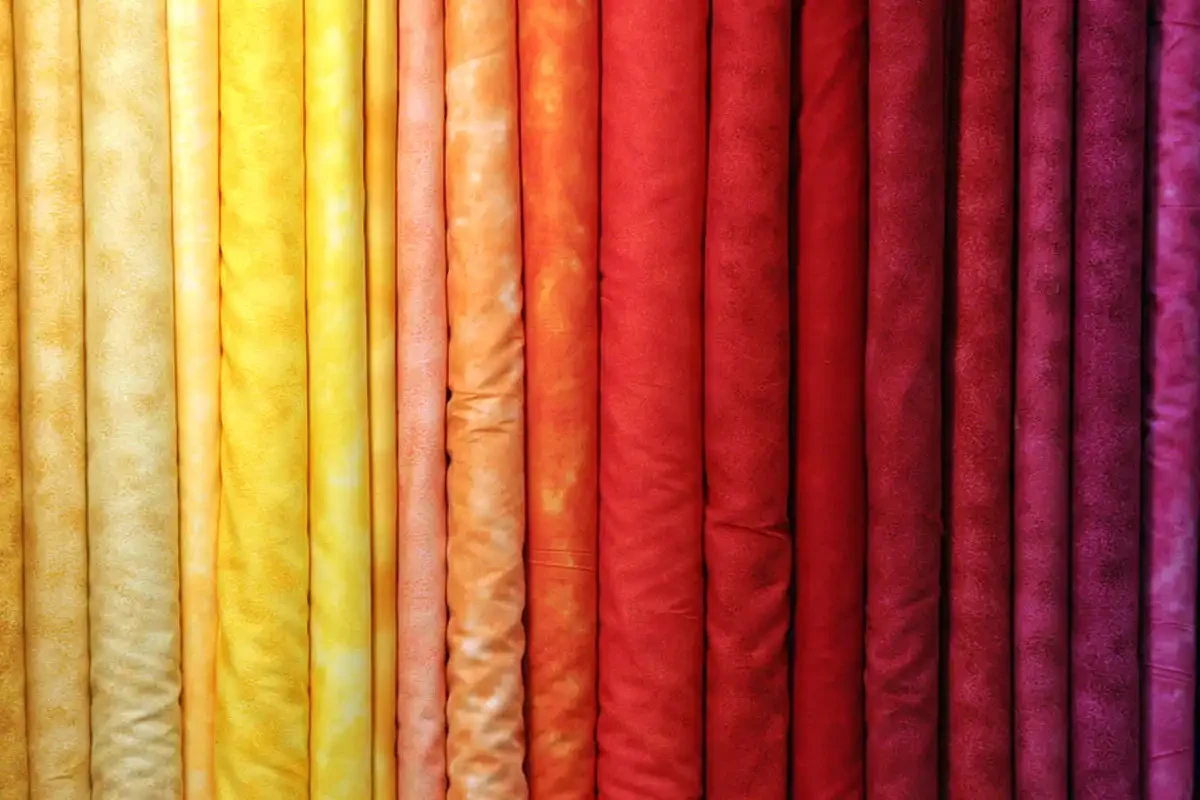
Factors affecting the colorfastness of fabric
The colorfastness of fabric is influenced by a set of technical and process factors, which sellers need to understand.
Type of fabric fiber
Natural fibers such as cotton and viscose behave differently in dye absorption and retention compared to synthetic fibers like polyester. Some fibers inherently have better dye affinity, but if the dyeing process is not standardized, colorfastness decreases.
Type of dye
Reactive, disperse, pigment, or acid dyes each have different colorfastness characteristics. Choosing an unsuitable dye for the fiber type is one of the main reasons for reduced colorfastness of the fabric.
Dyeing and dye fixation process
Even the best dyes will not have the necessary durability if not properly fixed. The use of standard fixing agents and precise control of temperature, time, and pH play a key role in enhancing colorfastness.
Types of fabric colorfastness in terms of application
Colorfastness is not just a single criterion; it is divided into different types depending on usage conditions.
Colorfastness to washing
The most important type of colorfastness, directly related to consumer experience. A fabric that bleeds color during household or industrial washing is considered unacceptable in the market.
Colorfastness to light
For curtain fabrics, upholstery, and interior decoration, resistance to sunlight is very important. Direct light can cause fading or a shift in color tone.
Colorfastness to abrasion
For fabrics that have continuous physical contact (such as upholstery or everyday clothing), resistance to abrasion is a critical criterion.
How is fabric colorfastness measured?
Fabric colorfastness is evaluated based on international and laboratory standards. These tests typically produce specific numerical results that help sellers document and present fabric quality.
Some common standards include:
-
ISO
-
AATCC
-
EN
The results of these tests are usually expressed on a numerical scale of 1 to 5, with a higher number indicating better colorfastness.
Common mistakes sellers make about fabric colorfastness
One common mistake is that some sellers limit colorfastness to just “not bleeding color.” However, a shift in color tone, dullness, or a loss of clarity are also signs of poor colorfastness.
Also, relying solely on the manufacturer’s claims without reviewing technical test results can harm the seller’s credibility in the long term.
Fabric colorfastness and its impact on the store’s brand
In today’s market, successful sellers are not just sellers—they are brands. Offering fabrics with high colorfastness causes the store’s name to become associated with quality.
Companies like AzarAran, which place special focus on quality, standards, and careful fabric selection, have been able to establish their position in the market precisely for this reason. Clear technical information and attention to details such as colorfastness are part of the professional identity of such brands.
How can sellers reduce the risk of poor colorfastness?
To manage this risk, fabric sellers can take the following measures:
-
Obtaining technical information and laboratory test reports
-
Working with reputable suppliers
-
Educating customers on how to wash and care for the fabric
-
Separating fabrics based on application (household, industrial, decorative)
Conclusion
Colorfastness of fabric is not a simple or superficial feature; it is one of the most important indicators of quality, customer satisfaction, and seller credibility. Sellers who take this issue seriously not only reduce return rates and dissatisfaction but also establish their brand in the customer’s mind.
In today’s competitive market, attention to details such as colorfastness is the very point of differentiation that separates professional sellers from the rest.


Leave a Reply
Want to join the discussion?Feel free to contribute!